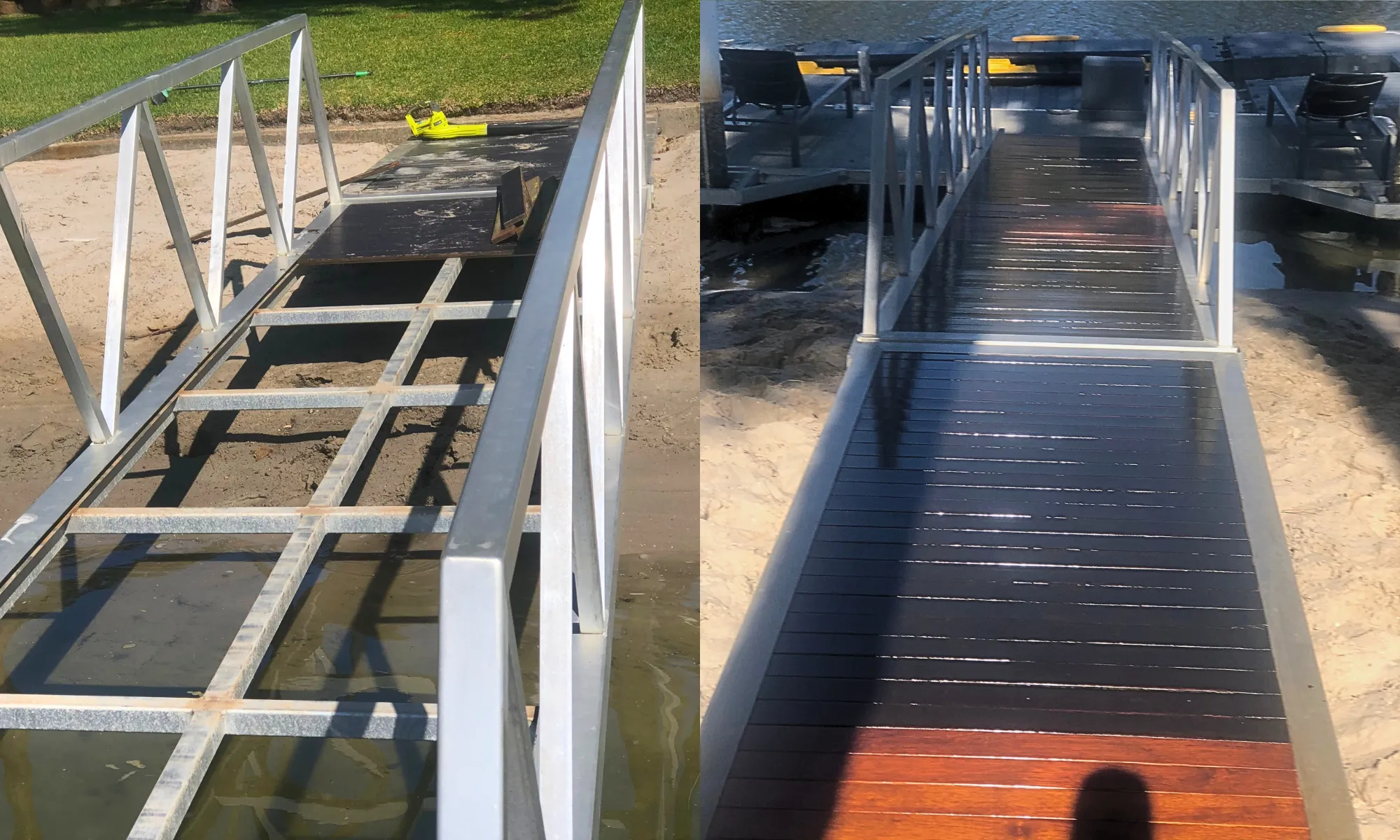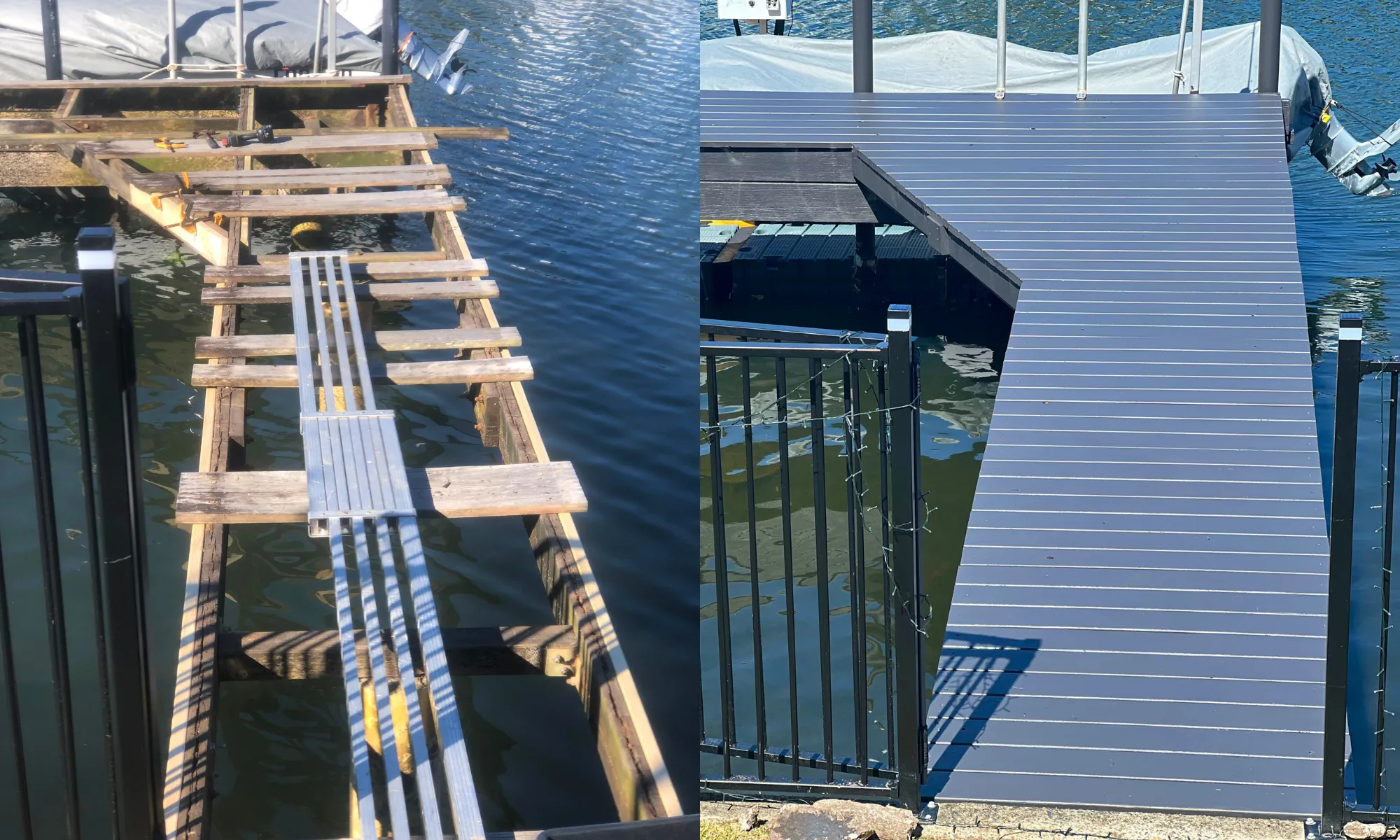
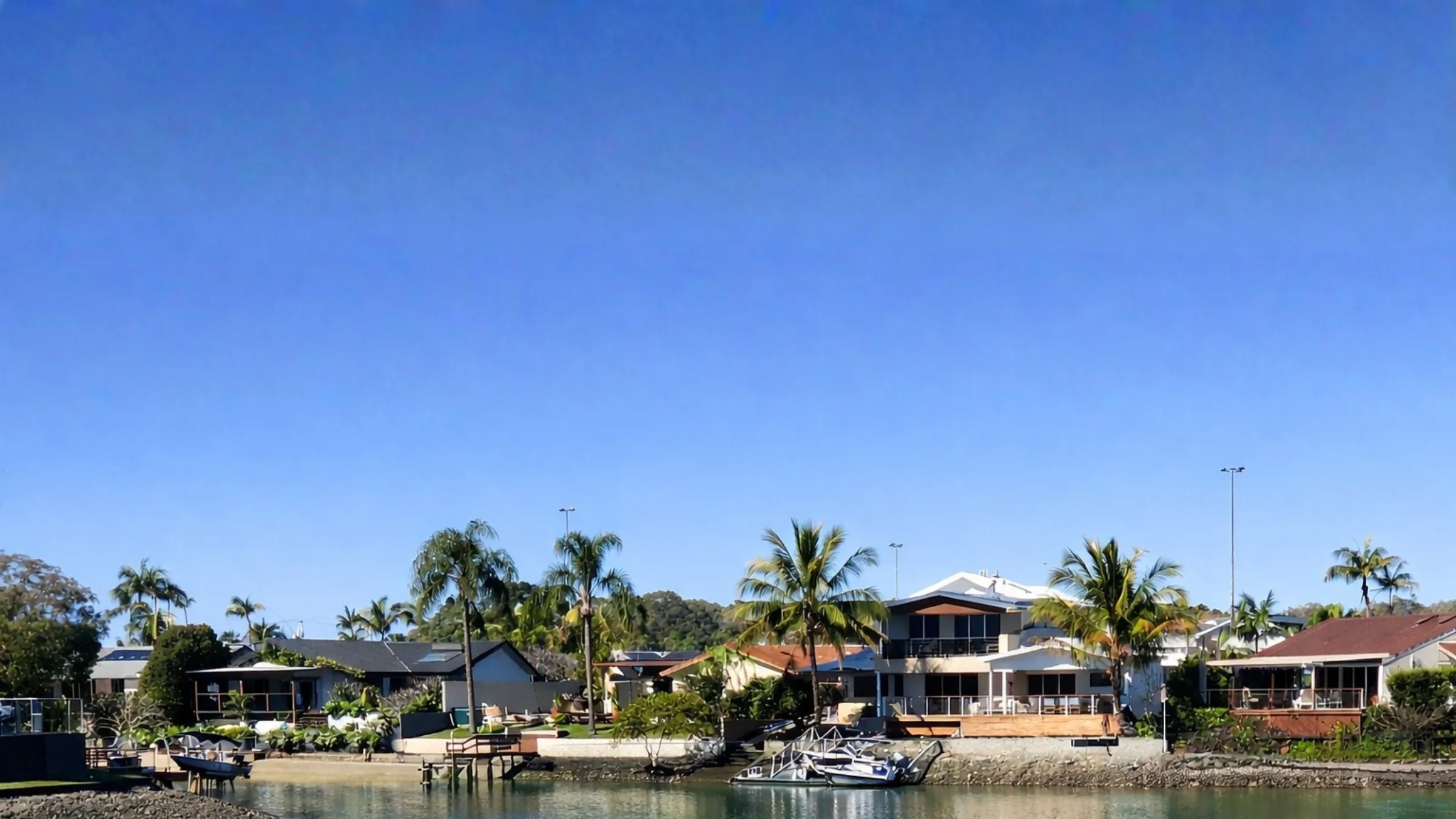

A canal-edge deck plays by different rules than a backyard deck. Council and Maritime Safety care about it more, the salt and splash punish it harder, and the fixings, balustrade and timber spec all need to be specified to a higher standard.
Here’s what a Gold Coast waterfront deck actually involves.
What Makes a Canal Deck Different
Three things. The deck overhangs, abuts or sits within reach of tidal water — that pulls in waterway authority rules. Salt aerosol shortens the life of any non-marine fixing or finish. And in most council areas, the balustrade specification at the water edge follows boundary or fall rules that don’t apply elsewhere on the property. Cut corners on any of the three and the build fails inspection or the rail.
Approvals — When Council Is In, When It Isn’t
Decks built on private land, fully landside of a seawall and below 1m in height, generally fall under exempt or self-assessable in the Gold Coast City Plan. Anything that overhangs the canal, sits on a structure shared with a jetty, or exceeds height triggers building approval and sometimes Maritime Safety Queensland sign-off too. We work this out before any quote lands so you’re not surprised.
Marine-Grade Fixings, in Plain English
The fixing spec on a canal-front deck is the difference between a 5-year and a 25-year deck. We use 316 stainless across all visible and structural fixings, sealed marine-grade brackets at any joist hangers, and corrosion-rated coach screws into the bearer. Cheaper alternatives exist. None of them belong on a canal.
Balustrade Rules at the Water’s Edge
Where the deck drops to the canal, balustrade falls under both fall-from-height rules (1m+) and pool-style rules in some flood-edge zones. Cable rail looks the cleanest and meets compliance with the right post spacing. Glass works where the view matters most. Standard timber rail still passes — it just dates faster.
Hardwood Species for Splash and Salt
The shortlist is Spotted Gum, Merbau and Ironbark, with Spotted Gum the most common because it takes oil well and stays sharp at the edges where salt does the most damage. We finish in penetrating oils, never film-forming, so the deck weathers honestly and recoats cleanly years later.
Detail Decisions That Lift a Build
A canal deck is seen from three angles: the house, the water and the neighbour. Integrated planters at the rail line, a stepped seat-edge along one run, and uplighting at the joist line are the small detail moves that take a basic deck and make it feel deliberate.
A Paradise Point Build
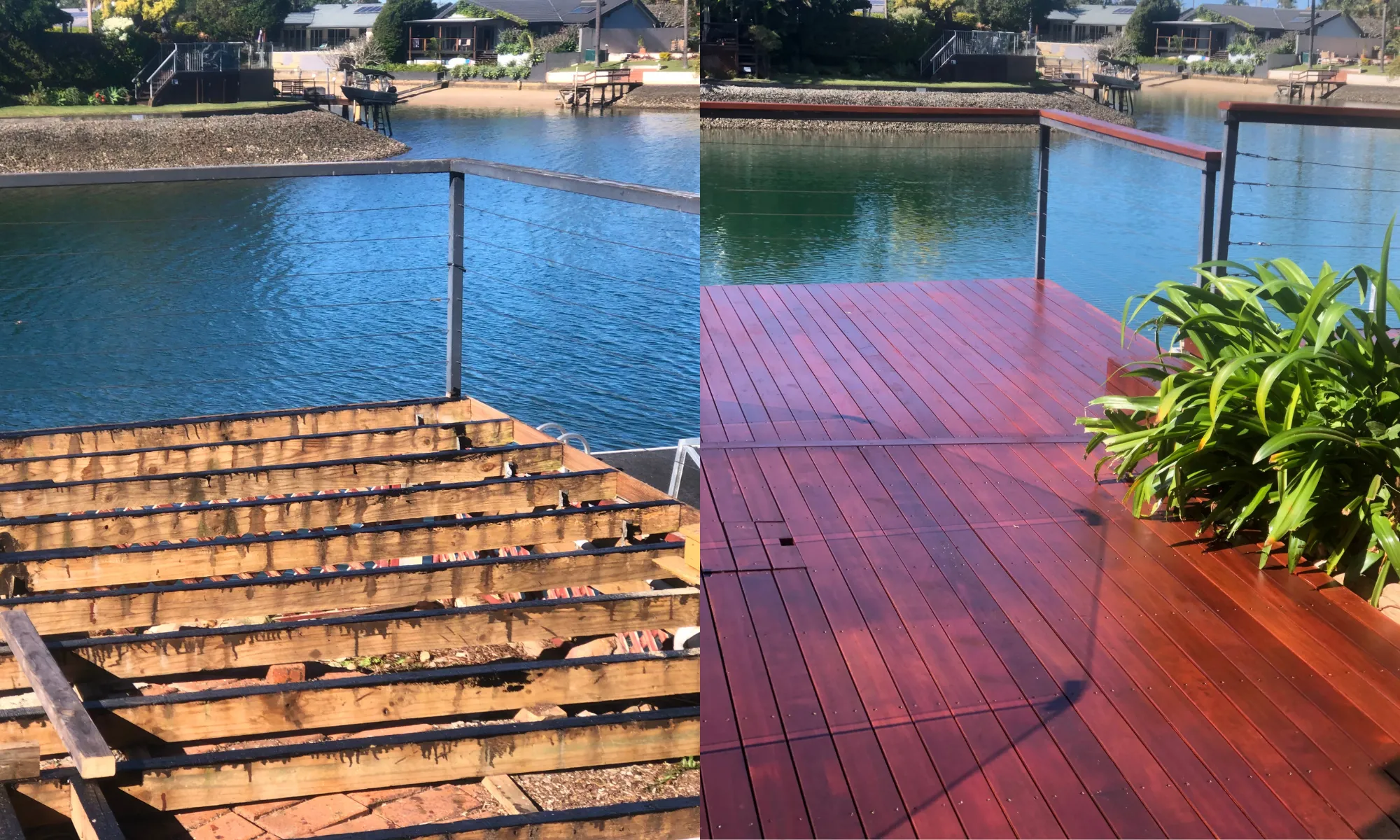
A Paradise Point owner came to us with stripped joists and a clear brief: clean rail, integrated planter, hardwood finish, 25-year fixings. We built in Spotted Gum, ran cable rail across the water frontage, set tropical-foliage planters into the rail run and oiled the lot in a penetrating finish. Five weeks on site, no surprises in the final invoice.
A canal-front deck done properly is one of the biggest visual upgrades you can make to a waterfront home. If you’re planning a waterfront deck on the Gold Coast, the YardTaskers deck team will scope the approvals, fixings and finish from the first walk-through and quote it in writing.