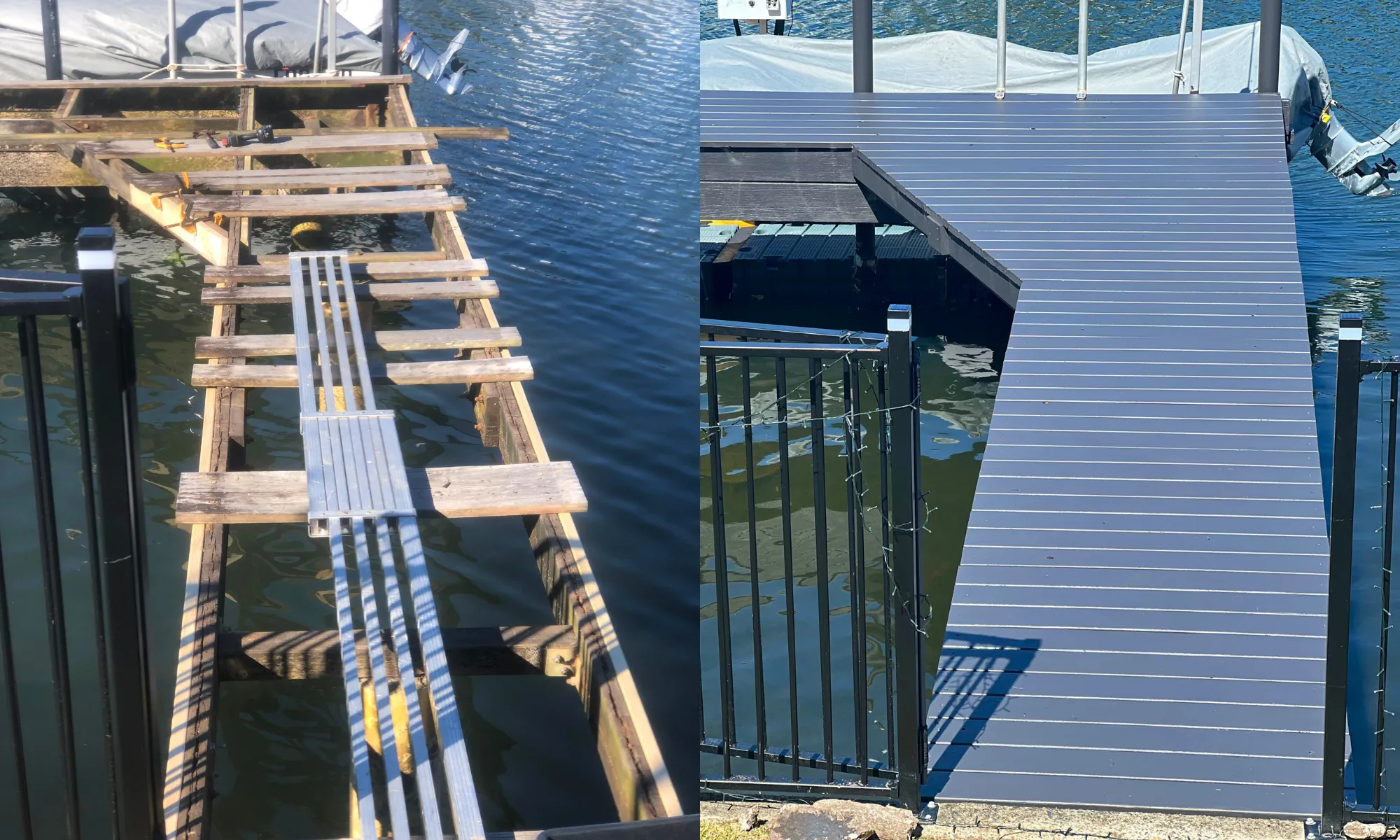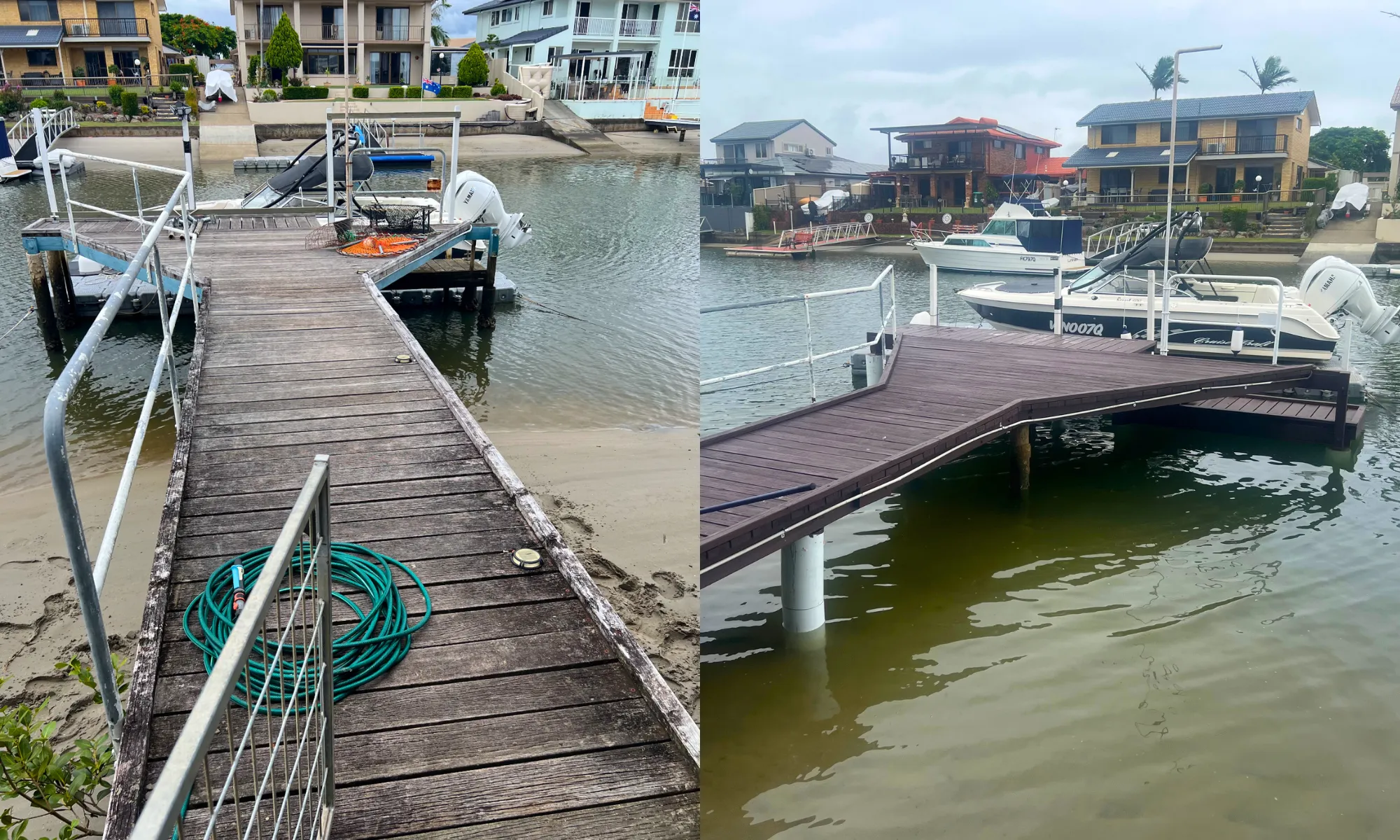
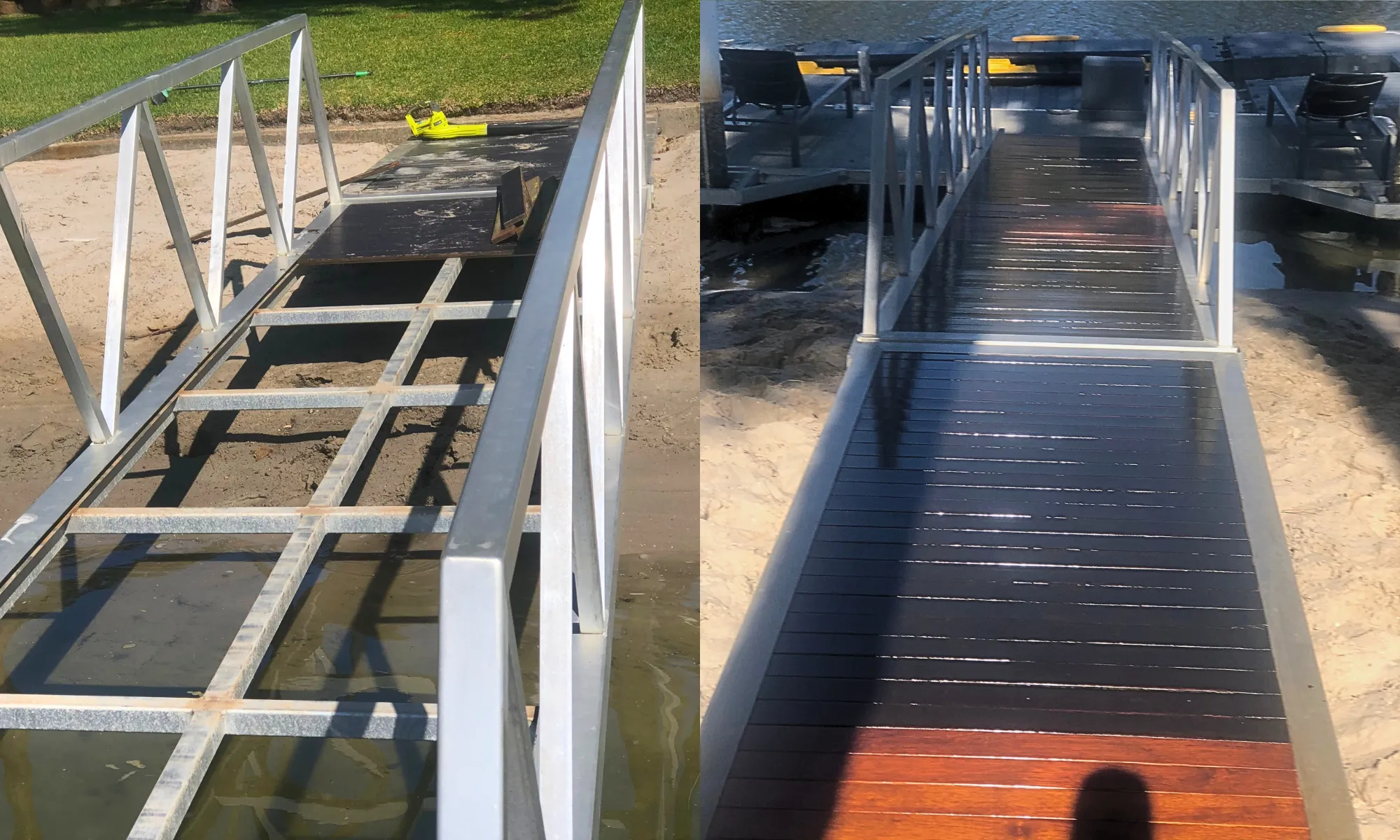

A tired-looking jetty doesn’t always mean a tired jetty. Most aluminium gangway frames on Gold Coast canals outlast their decking by a decade or more — and a lot of owners replace the whole structure when only the boards needed to come off.
The good news is that telling the difference is straightforward. Here’s how to spot a re-deck-only job, and what one actually involves.
Why “Looks Bad” Isn’t “Is Bad”
Greyed timber, splinters and lifting board ends are surface-level wear. The frame underneath — the aluminium gangway, joists and brackets — is usually doing fine. If the frame has been galvanised steel or marine-grade aluminium from day one, it’s not unusual to see a 20-year-old jetty with a structurally sound skeleton and boards that are 60% past their use-by.
The 10-Minute Frame Check
Before you call anyone, walk the jetty and check three things. First, does the frame flex underfoot when you bounce on the centre of a span? It shouldn’t. Second, is there visible corrosion at the brackets, bolts or where the gangway meets the seawall? Surface pitting is fine; flaking and rust streaks aren’t. Third, do the joists feel solid when you tap them with a knuckle through the gaps between boards? A dull, hollow note means trouble underneath.
Five Signs the Frame Can Stay
The frame is almost always saveable when:
- The aluminium has surface oxidation but no flaking or thinning.
- Bolts and brackets hold their tension when checked with a spanner.
- Joists carry weight without flex or sponge.
- The gangway sits true in its hinge points, with no bowing along its length.
- Bracket fixings into the seawall or pylons are still sound.
If those five hold up, you’re a re-deck candidate.
Choosing Boards: Hardwood, Composite or Aluminium
Hardwood is still the prettiest finish on a jetty and the easiest to repair board-by-board down the track. Capped composite holds its colour better, runs cooler in summer, and skips the every-2-year oil cycle — but it costs more upfront and locks you into the brand’s profile. Aluminium decking is the longest-lived of the three; it’s quietly become the default on canal jetties where the owners want low-touch and don’t mind the industrial look.
We’ll walk you through what suits the jetty in front of us, not what marks up the most.
Inside the Job — A Broadbeach Waters Re-Deck
A Broadbeach Waters owner came to us last summer with a 14-year-old gangway. The boards were tired and one had cracked underfoot. The aluminium frame was untouched. We stripped the deck on a Monday, cut and pre-drilled hardwood replacement boards in our workshop, fixed them with marine-grade 316 stainless on the Tuesday, and oiled the lot on the Wednesday. Three days, no scaffolding, no marine works permit, no rebuild bill.
When a Full Rebuild Is the Smarter Call
There are jobs that fail the frame check — older timber-framed jetties, badly corroded gangways, or pylons that have shifted with tide and time. In those cases, throwing new boards onto a tired frame buys a few seasons and not much more. We’ll tell you when that’s the case before you sign anything.
A jetty that looks past its prime usually isn’t — and a 3-day re-deck is a far smaller job than a full rebuild on every front. If your gangway needs a fresh deck on the Gold Coast, get in touch with the YardTaskers jetty team for an honest on-site assessment and a written fixed quote.