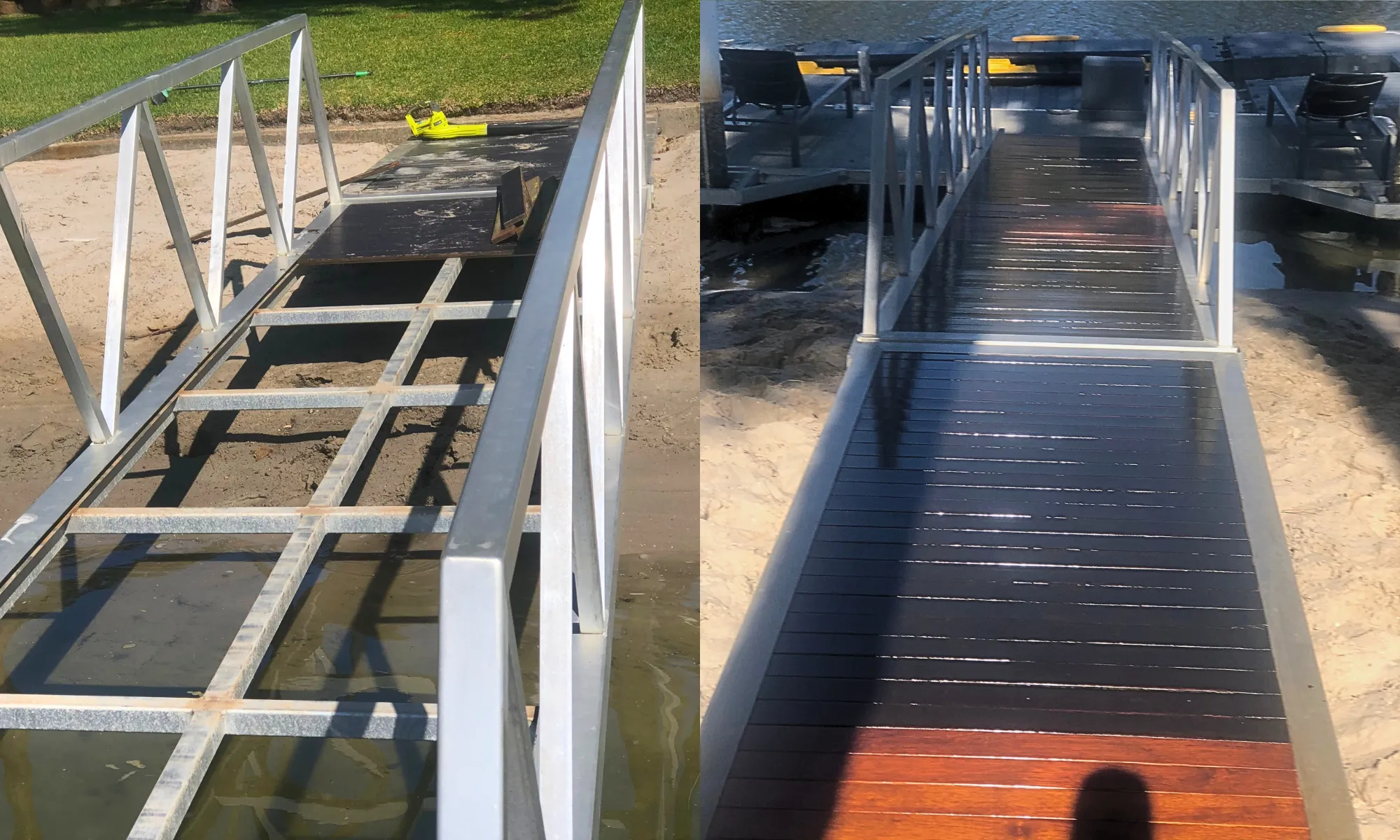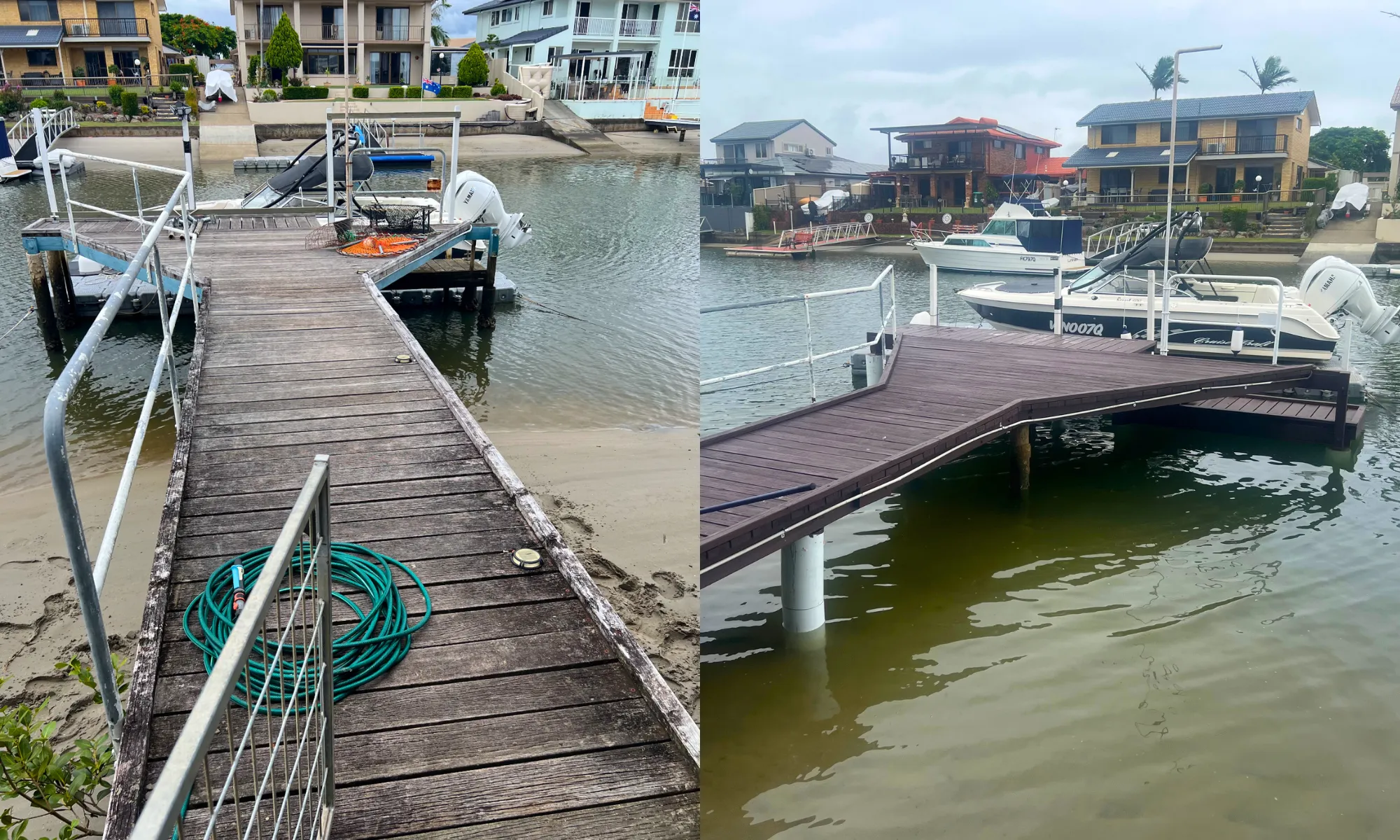
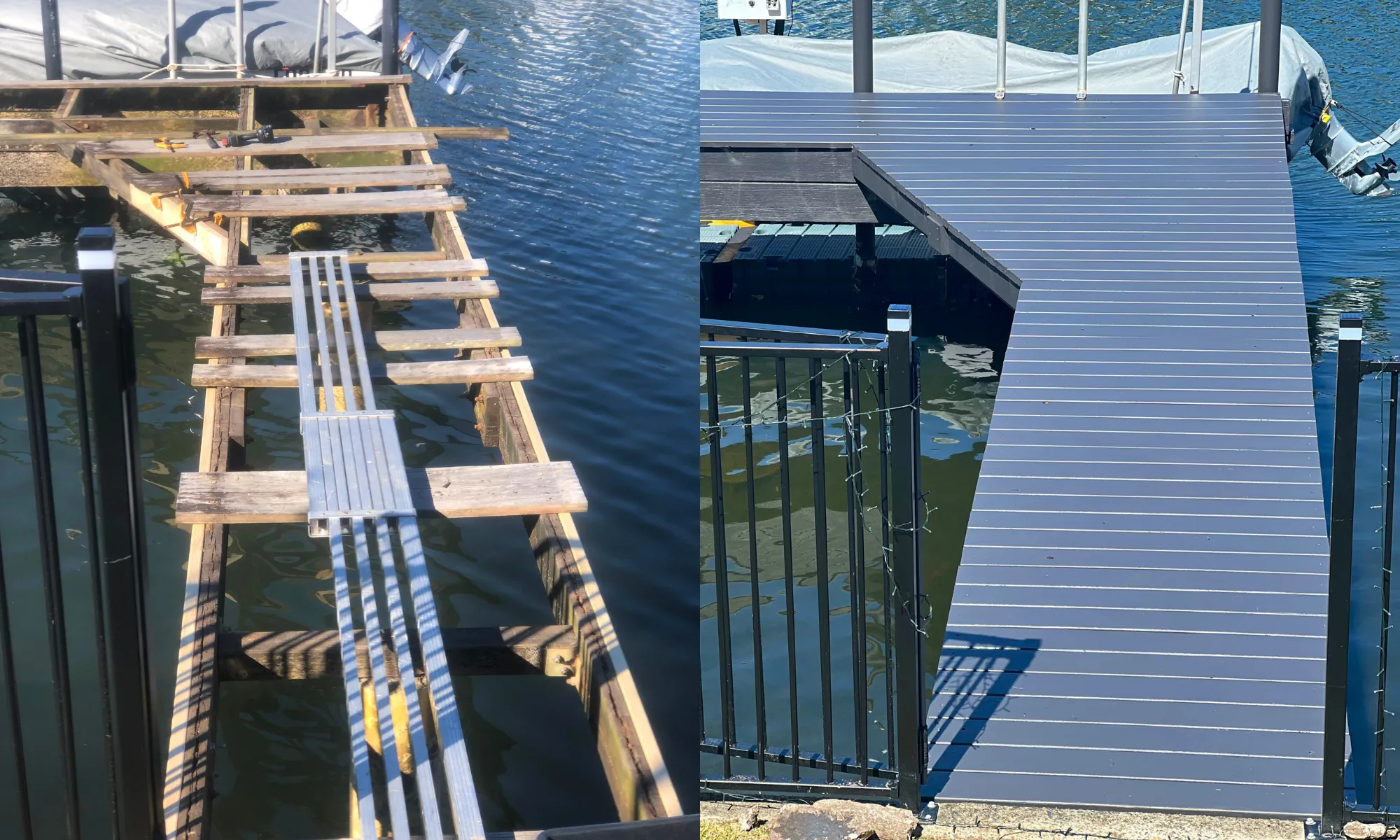

Pontoons live in the splash zone — closer to the water, more constant wetting, more salt sitting on the surface than any deck higher up the bank. That’s why pontoon tops fail before the rest of the jetty, and why the choice between composite and hardwood matters more here than anywhere else on the structure.
Here’s how the two stack up after 15 Gold Coast summers.
Why Pontoon Tops Fail First
The splash zone is the killer. A pontoon sits 200–400mm above mean tide, which means salt water hits the boards every wake, every wind chop, every king tide. Salt crystallises in the timber as it dries, then absorbs moisture again on the next splash — that wet/dry cycle is what splits boards, lifts oil and pulls fixings.
Lifespan in Real Gold Coast Conditions
Hardwood like Spotted Gum or Merbau, oiled every 18–24 months, will give you 10–15 years on a Gold Coast pontoon before boards start needing replacement. Capped composite — the modern variety, not the early matte stuff — is rated for 25 years and routinely hits it because the cap is impervious to salt. Aluminium is the third option here too, and edges past 30 years in service.
Ownership Over 15 Years
Hardwood is the lighter lift on day one and the heavier one across the years — every 18–24 months back to oil, the occasional split board pulled and replaced, and a partial re-deck somewhere in the middle of that window. Composite is the reverse: more involved on install day, then close to untouched for the lifespan. If you plan to sell within five years, hardwood’s the easier match. If you plan to hold the property, composite usually wins on hands-off ownership.
Slip, Heat and Bare Feet
This is where composite has caught hardwood and overtaken it. Modern capped composite boards have grooved or brushed surfaces that grip wet feet better than smooth oiled timber. They also run cooler in summer than dark hardwood — a real difference on a 35°C January afternoon when the kids are on and off the water all day.
Where Hardwood Still Wins
Two scenarios. First, period houses where the canal aesthetic matters — composite still reads as composite next to old timber rails, even on the best boards. Second, repairs — a damaged hardwood board can be lifted, replaced and oiled to match in a morning. A damaged composite board in a discontinued profile is a hunt.
A Mermaid Waters Switch
A Mermaid Waters owner with a 12-year-old hardwood pontoon top called us in after the third partial replacement in five years. We pulled the old deck, kept the aluminium frame, and re-decked in capped grey composite with 316 stainless fixings. Two days on site. Zero oiling visits since.
There’s no universal winner — only the right choice for the position your pontoon sits in, the look you want and how long you plan to own it. If you’re choosing between materials for a Gold Coast pontoon re-deck, the YardTaskers jetty and pontoon team will walk you through the trade-offs on your job and quote both options side-by-side.