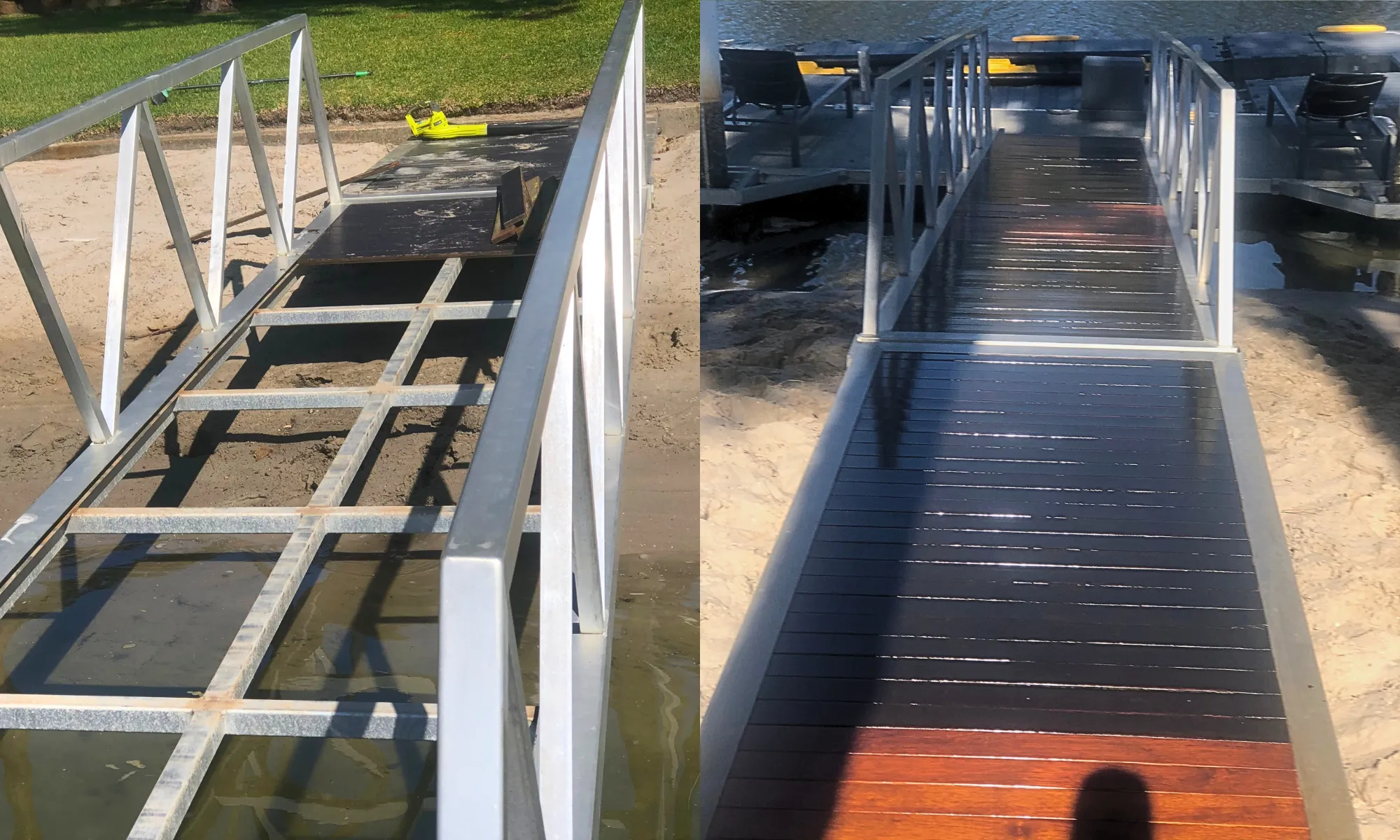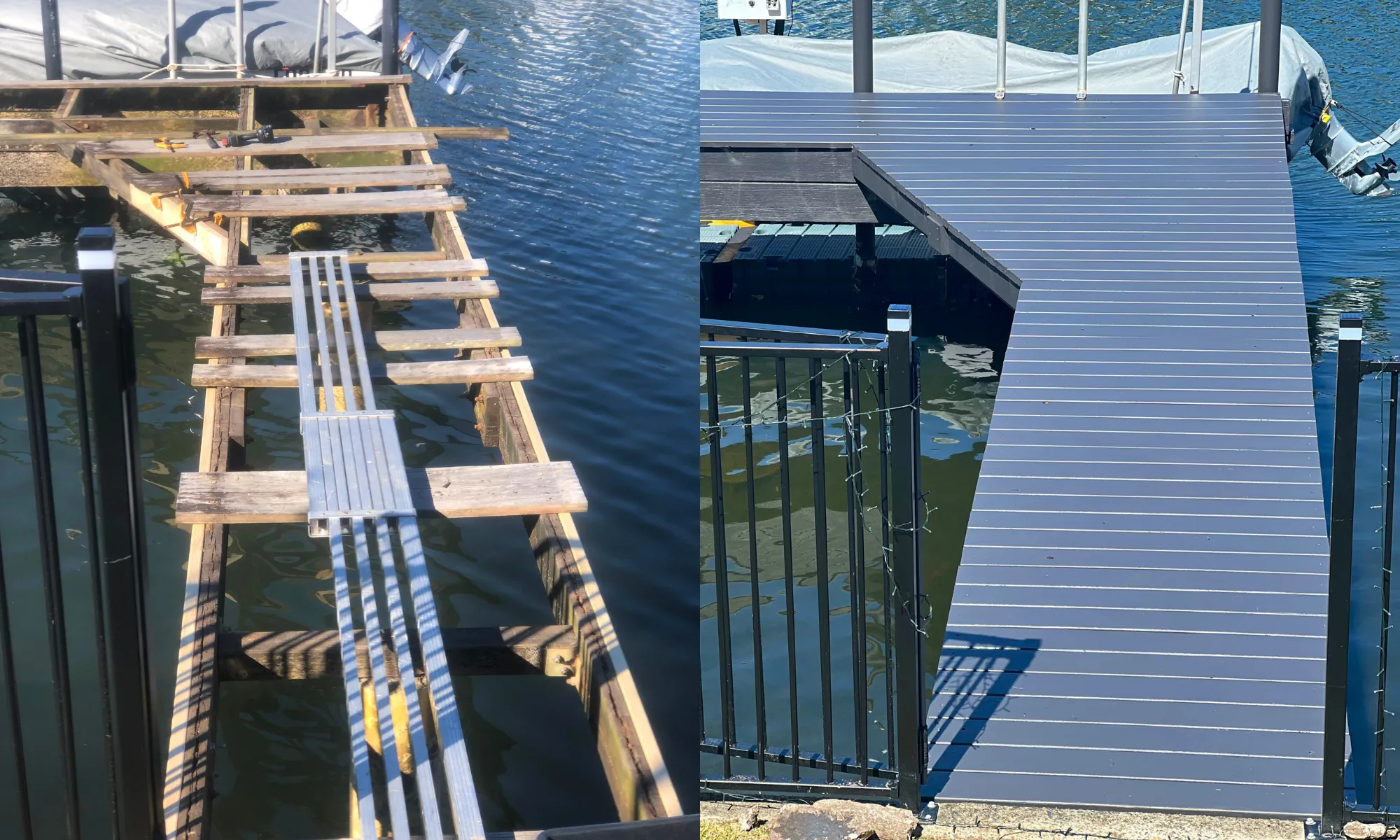
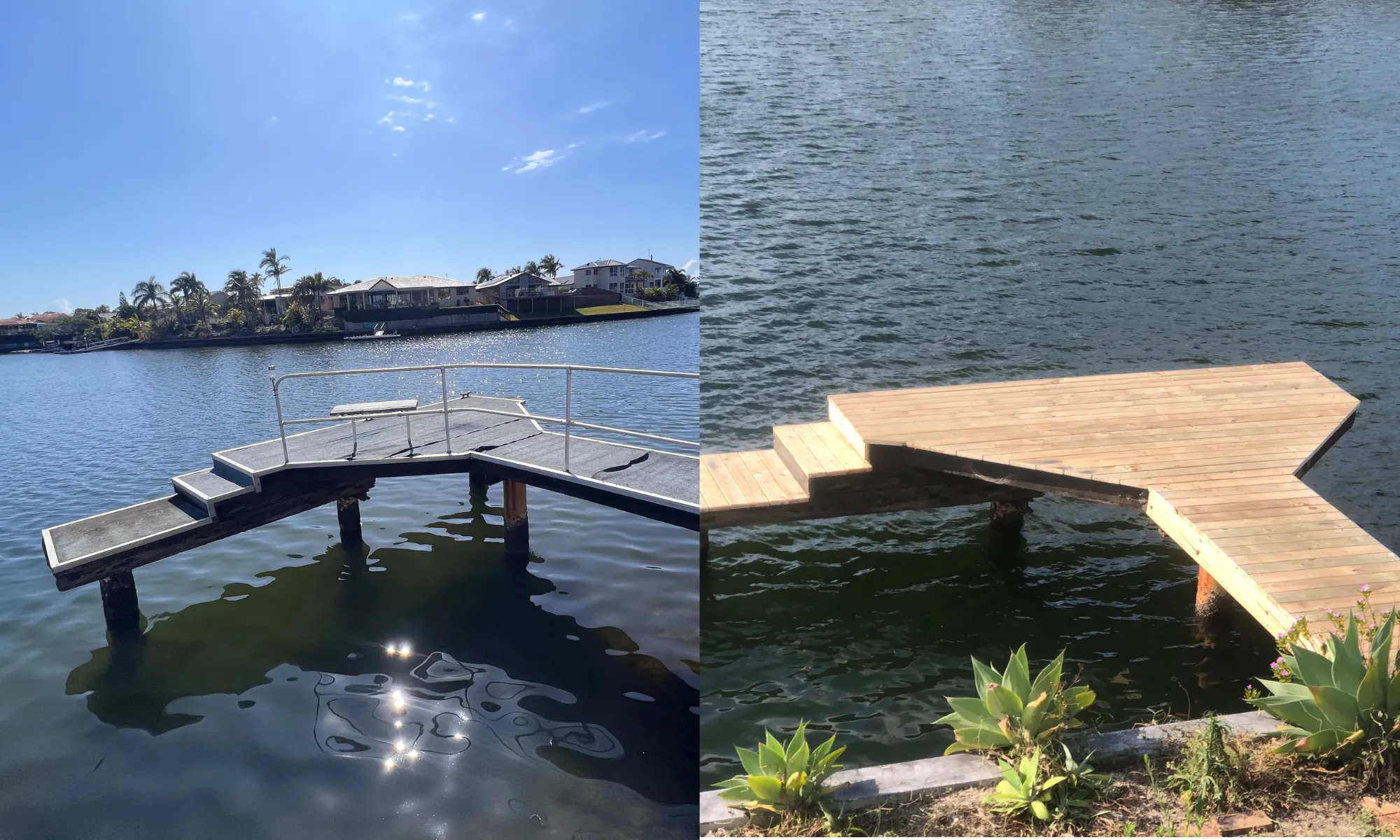
Plenty of Gold Coast jetties are structurally fine but the wrong shape — too narrow for a chair, too curved for fishing, or just smaller than today’s boat. Tearing them down to start over isn’t always the right move. In a lot of cases the existing pylons can carry a reshape that gets you the deck you actually want.
Here’s how to tell.
Why a Reshape Often Beats a Rebuild
Two reasons — scope and time. A reshape uses the existing pylons, hinge points and seawall fixings, which means no marine-piling work, faster approvals, and a much smaller job than a full rebuild. The result functions like a new jetty but legally and structurally lives on the original footprint.
The Three Reshape Patterns
Widening adds deck either side of the existing centreline — useful for chairs, casting room or a beach-step landing. Angling rotates the outer landing to face a new direction, often to align with the way the boat moors or the way the sun sits in the afternoon. Extending pushes the deck further out into the canal — the tightest of the three legally, but workable on the right tide line.
What Council and Maritime Safety Care About
Council looks at proximity to property boundaries, rail compliance and any change in occupable area. Maritime Safety Queensland looks at any change to the canal-side footprint — anything that pushes further into the waterway needs a tick. Reshapes that stay inside the original outline (widening, angling) are usually the easiest to approve. Extensions take longer.
Can the Pylons Carry It?
The structural question is whether the existing pylons can support more deck weight. The answer depends on pylon material (treated timber, concrete or steel-cased), age, and the load path of the new shape. We check pylon condition, hinge brackets and the seawall fixing before we quote a reshape. If they can’t carry it, we say so before any plan goes forward.
Materials and Rail Decisions
A reshape is the right time to also rethink the rail and the deck surface. New deck on old pylons is a standard pairing — owners often switch from timber rail to cable rail at the same time, or from greying hardwood to capped composite for the lower-maintenance run.
A Runaway Bay Reshape
A Runaway Bay owner had a 1990s curved bullnose jetty top with limited usable space. The pylons were sound. We reshaped to a square outer landing — wider, rail-free on the outside edge, hardwood deck — using the original pylon line and adding two new outboard piers for the wider footprint. Council exempt, MSQ unaffected, two weeks on site. Same address, different jetty.
When the Right Answer Is “Rebuild Instead”
Some jobs fail the pylon check. Others need a footprint extension that triggers full marine works approvals — at which point the scope of a reshape closes in on a rebuild and a rebuild becomes the cleaner call. We’ll always quote both options side-by-side so you can see which way the job falls.
A reshaped jetty often gets you the deck you actually want without the scope and approvals of starting over. If you’re weighing an extension or reshape on a Gold Coast jetty, the YardTaskers jetty team will inspect the pylons, scope the approvals and quote both reshape and rebuild paths in writing.