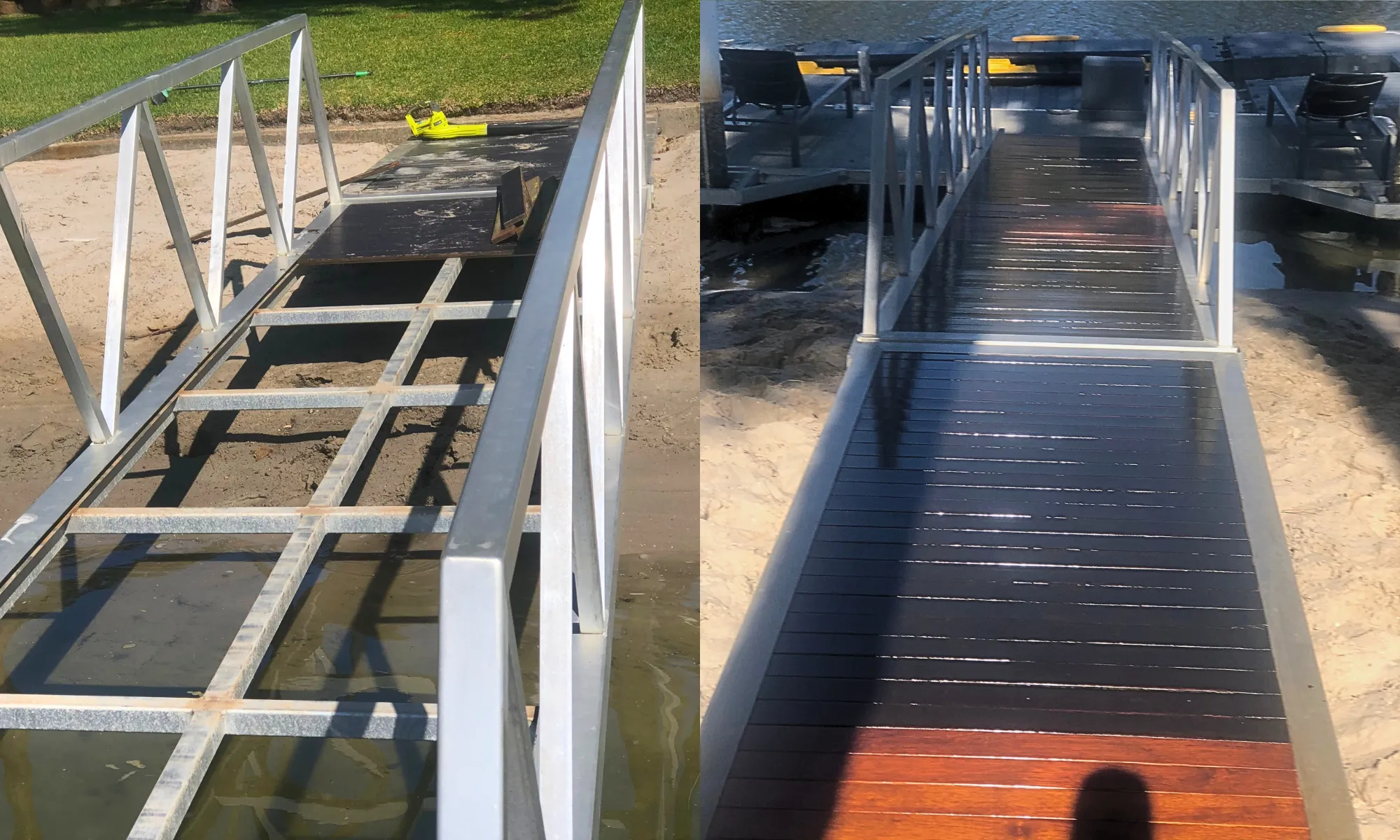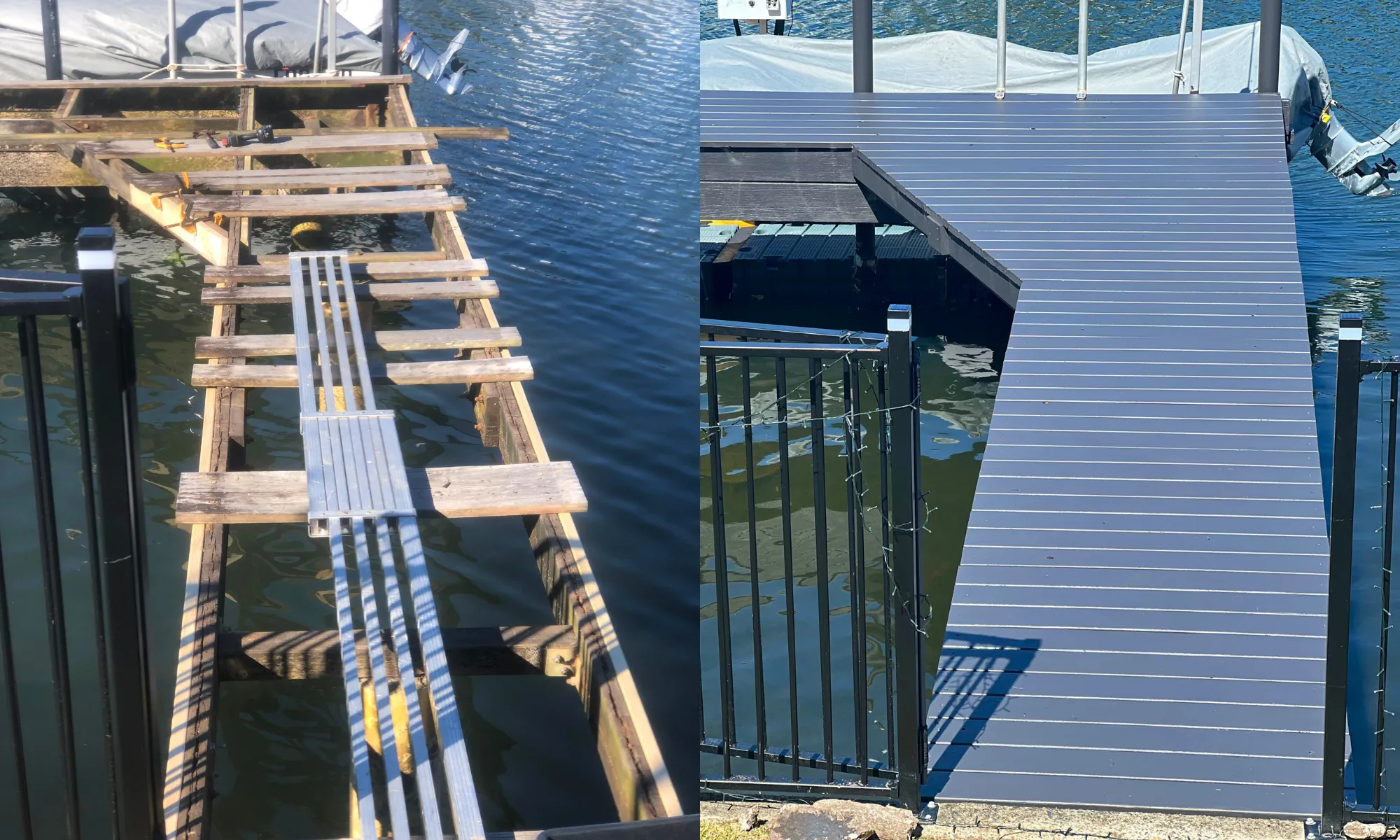
A full jetty rebuild is the call when the structure underneath has run its course — pylons leaning, frame sponging, fixings letting go. It’s a bigger project than a re-deck, but on the right job it’s the only call that lasts.
Here’s how a pylons-up build runs on the Gold Coast in 2026.
When a Rebuild Is the Right Call
Three signs make a rebuild the right move over patching: pylons that have shifted with tide and time, frame timber that’s lost its load capacity, and a footprint that’s outgrown the way the property is now used. Anything short of all three is usually a Tier-2 re-deck-with-structural-fixes call instead.
Step 1 — Survey, Approvals and Maritime Safety
The first week is paperwork. We survey the site, check council exemption thresholds, and confirm whether Maritime Safety Queensland sign-off is required for the new footprint. Most reshapes on the same outline are exempt. Anything that pushes new piles into the canal triggers MSQ approval and 4–6 weeks of lead time. We start this clock day one so the build doesn’t wait on it.
Step 2 — Removing the Old Structure
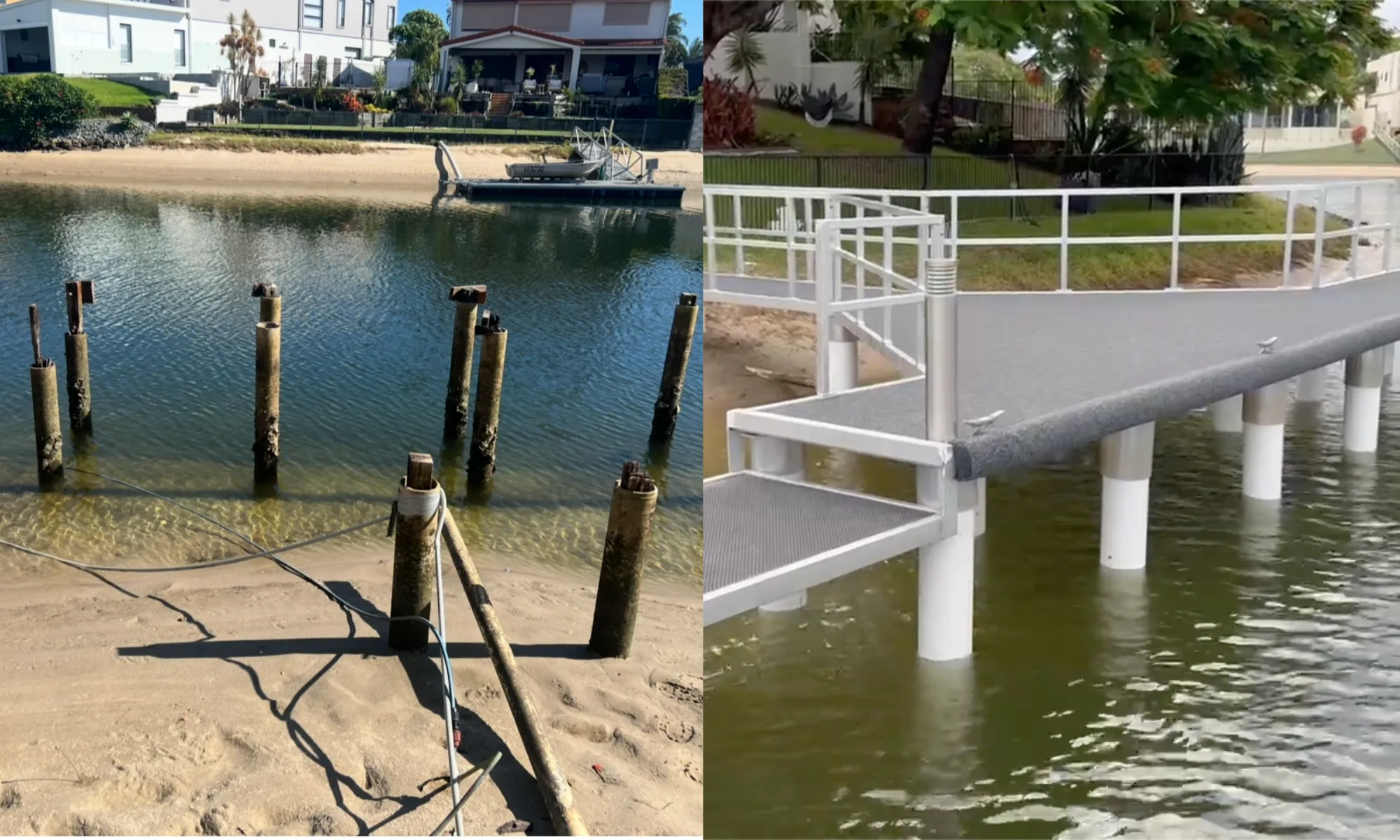
Old pylons come out either by extraction (timber pylons in soft sand) or cut-off-at-bed-level (concrete or steel-cased). Cut-off is more common and protects the seawall — which is the next thing the project has to not damage. We barge the old timber and metal out to council disposal, never to the canal.
Step 3 — New Piers
Three options for new piers on a Gold Coast jetty: concrete-filled steel-cased piles (longest life of the three), reinforced concrete piers (mid-tier on lifespan), and treated hardwood timber piles (the shortest of the three). For most full rebuilds we recommend concrete-filled steel — 50+ years in the canal with normal maintenance.
Step 4 — Frame, Decking and Rail
Frame goes in once piers cure. Aluminium frame is now the default — galvanised steel still works on the right job but adds weight and rust risk. Decking is hardwood, capped composite or aluminium depending on the brief. Rail is cable, glass or timber, set to current fall-from-height compliance.
Step 5 — Final Finish and Handover
The last week is the finishes that make it. Penetrating oil on hardwood decks, two coats wet-on-wet. Fixings checked, torque set on the brackets, cable rail tensioned. A walk-through on the day with the owner — every fixing, every spec, every product warranty written into a handover document so there’s no “what was that part again?” three years later.
A Bundall Jetty, Pylons to Finish
A Bundall owner came to us with a 14m timber jetty that had reached its end. Pylons leaning, joists soft, deck splitting. We extracted the old timber pylons over a week, set five new concrete-filled steel piers, framed in aluminium, decked in Spotted Gum and finished with stainless cable rail. Six weeks on site, plus 4 weeks of MSQ lead. The owner now has a structure rated to outlast the house.
Build Timeline
A typical full Gold Coast jetty rebuild — 10–14m, concrete-filled piers, aluminium frame, hardwood deck, cable rail — runs 8–12 weeks elapsed including approvals, with 4–6 weeks of that on-site. Composite or aluminium decking adds time on the install side and removes the oil cycle for the life of the structure.
A pylons-up rebuild is the biggest call you’ll make on a Gold Coast jetty — and the one with the longest payoff when the existing structure is past sensible repair. If you’re looking at a full jetty build on the Gold Coast, the YardTaskers jetty team will scope, approve and quote the project in writing, with fixed dates from MSQ approval through to handover.