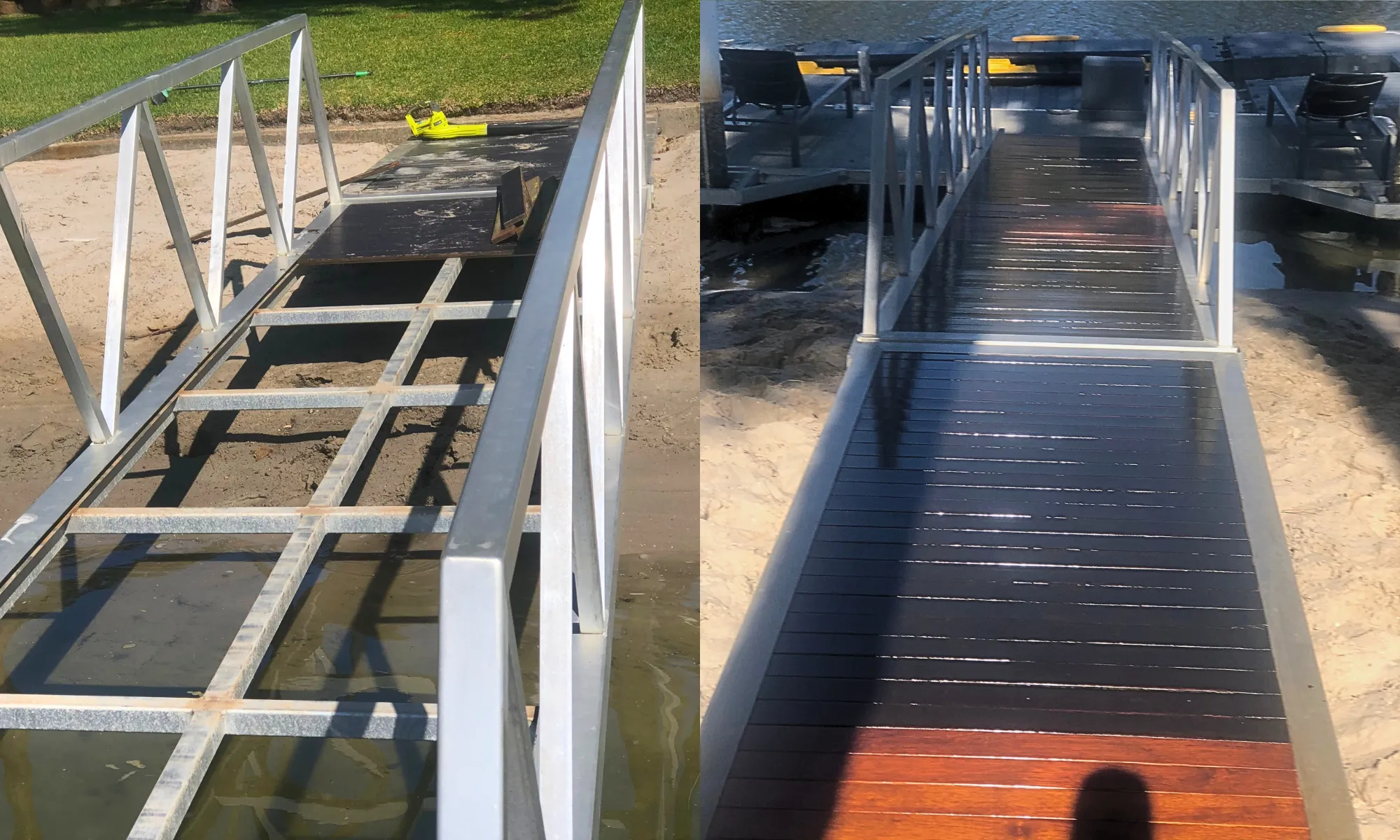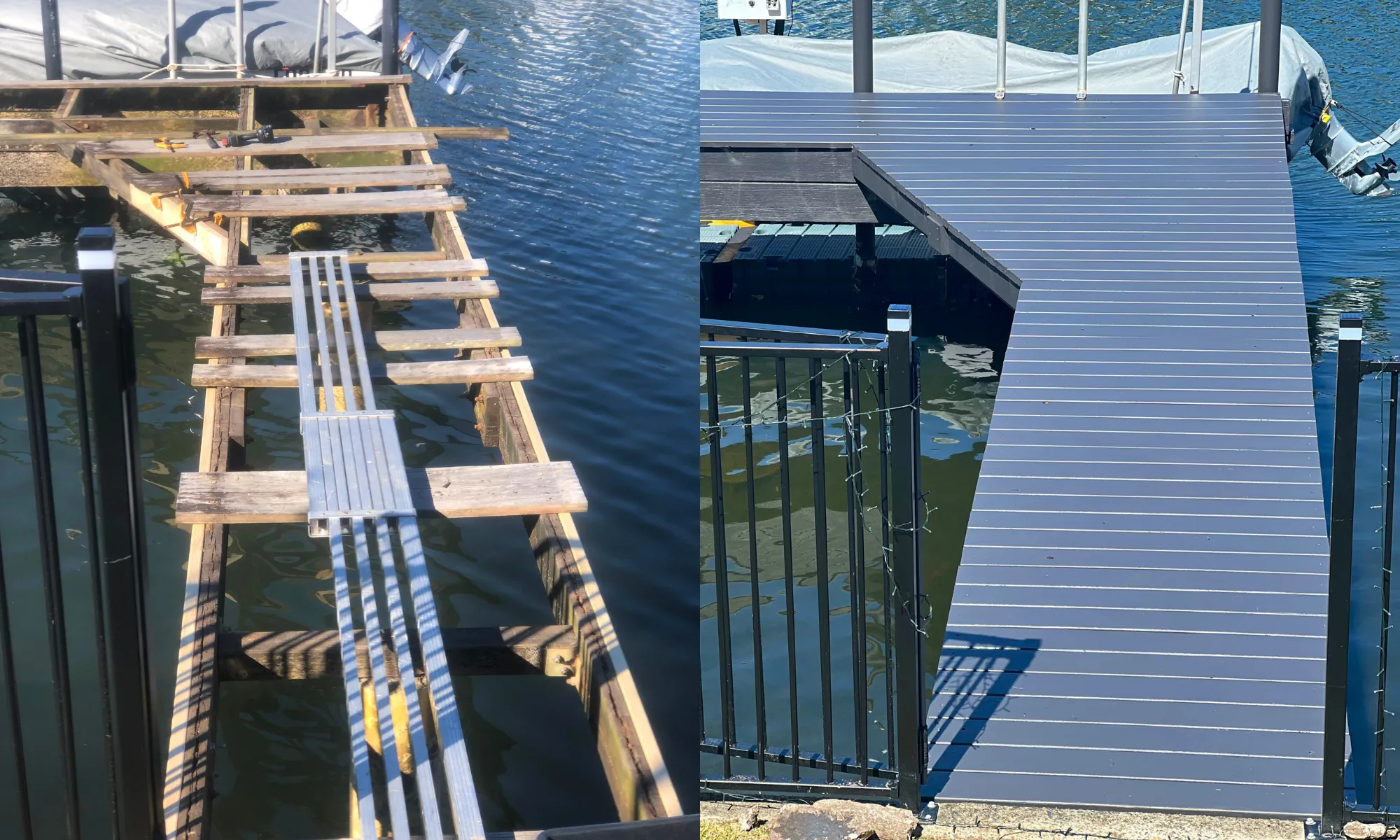
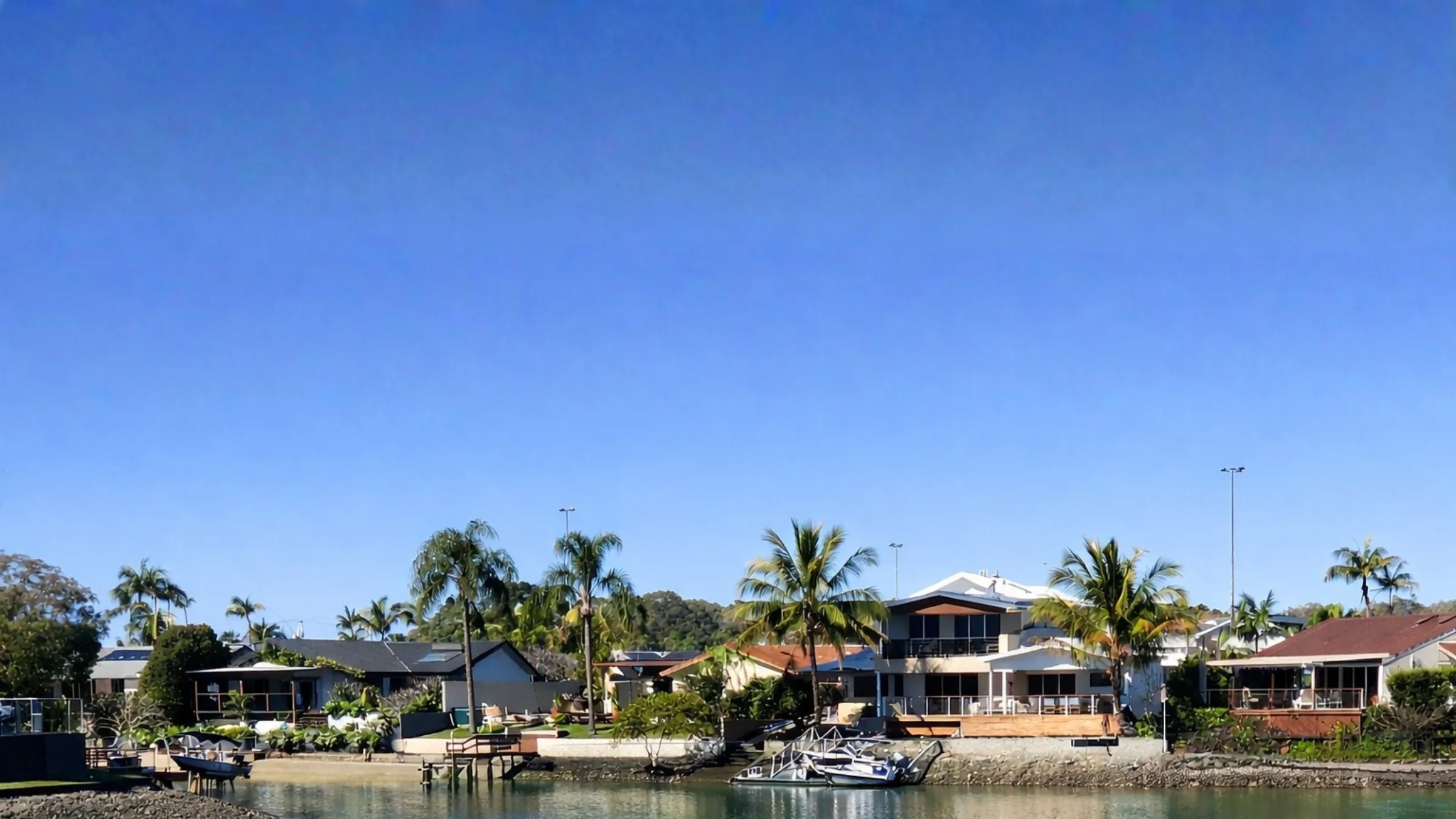
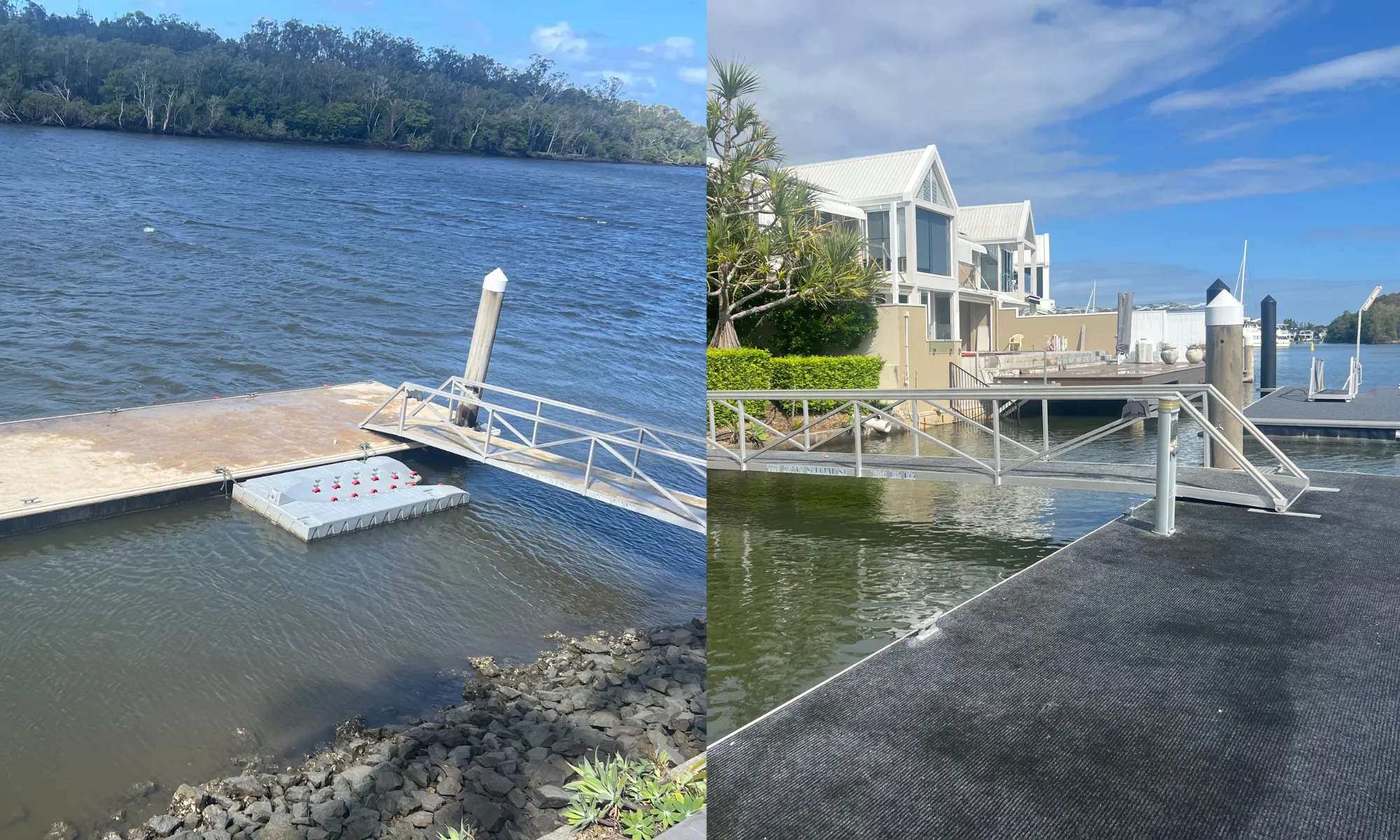

Most ’90s and ’00s Gold Coast jetties were built for a tide range and a usage pattern that’s shifted. They’re often fixed where modern systems flex, heavy timber where modern systems are aluminium, and serviced two or three times a decade where a modern system runs almost untouched.
Here’s what changes when you upgrade — and what’s involved on the way.
Why Older Fixed Jetties Fight the Tide
A fixed jetty sits at one height. The Gold Coast tide range — up to 1.8m on king tides — means a fixed walkway is often too high to step onto a boat at low tide and submerged at the highest. Owners just live with it. Modern hinged aluminium gangways follow the tide, so the step from gangway to pontoon stays level whether the canal is up or down.
What “Aluminium Gangway System” Actually Means
The system has three parts. A hinged aluminium gangway anchored to the seawall or jetty head, sitting on rollers or a hinge plate so it rises and falls with the pontoon below. An aluminium-framed pontoon with composite, hardwood or aluminium decking on top. And a piling guide — usually steel or composite — that locks the pontoon to a fixed point so it can’t drift. Each part is built to outlast a timber equivalent by 10–15 years.
Tide Compensation — The Feature Owners Notice First
Owners who switch almost always say the same thing: stepping onto the boat is easy again. No bending, no jumping, no waiting for tide. For older owners and families with kids, that single change is often what makes the upgrade worth it on its own.
20-Year Maintenance: Aluminium vs Timber
A timber-framed jetty needs an oil cycle every 18–24 months, joist replacements at 10–15 years, and bracket retighten checks every season. An aluminium-framed system needs annual hinge and roller checks, a fastener torque pass, and that’s most of it. Across 20 years, the difference is measured in oil cans not bought, weekends not lost and surprise repairs not paid for.
Upgrade vs Like-for-Like Rebuild
A timber-frame like-for-like rebuild puts the same shape back in the same place — same materials, same maintenance cycle, same lifespan ceiling. An aluminium gangway system on the same footprint shifts the structure into a longer-lived, lower-maintenance class altogether. The decision usually comes down to how long you plan to own the property — and how much weekend time you want back.
Permits, Body Corp and Canal Estate Rules
Some canal estates and body corporate communities have look-and-feel rules that limit board colour, rail style or pontoon footprint. Maritime Safety Queensland approval is normally required for any change in pontoon size or anchor method. We confirm both before quoting so the design we quote is the design that gets built.
A Sovereign Islands Upgrade
A Sovereign Islands owner had a 22-year-old timber finger jetty and a tired floating timber pontoon. The boat had outgrown both. We removed the old structure, set new piling guides, built a new aluminium-framed pontoon with capped composite top and hung an aluminium gangway off the resurfaced jetty head. Three weeks on site. The owner runs a 24ft cruiser off it and hasn’t oiled a board since.
The right time to upgrade a jetty system is the moment its limitations start eating into your weekends, repair time or boat access. If you’re weighing an aluminium gangway and pontoon upgrade on the Gold Coast, the YardTaskers jetty and pontoon team will scope the structure and permits on-site and hand you a fixed written quote.