Materials We Build With
We match the material to the salt, sun and budget on each Gold Coast job.
How they compare
We build jetties and deck frames from treated timber rated H3 to H5, with 316 marine-grade stainless steel fixings where they get wet and galvanised ones elsewhere. For the surface you walk on, these are the four materials we use.
- Best for
- Decks above water
- Upkeep
- Coat to keep colour
- Trade-off
- Costs more upfront
- Best for
- Wet, salty boardwalks
- Upkeep
- No oiling
- Trade-off
- Industrial look
- Best for
- Natural timber decks
- Upkeep
- Oil about once a year
- Trade-off
- Can split unoiled
- Best for
- Low-upkeep decks
- Upkeep
- No oiling or staining
- Trade-off
- Dark colours get hot
Accoya
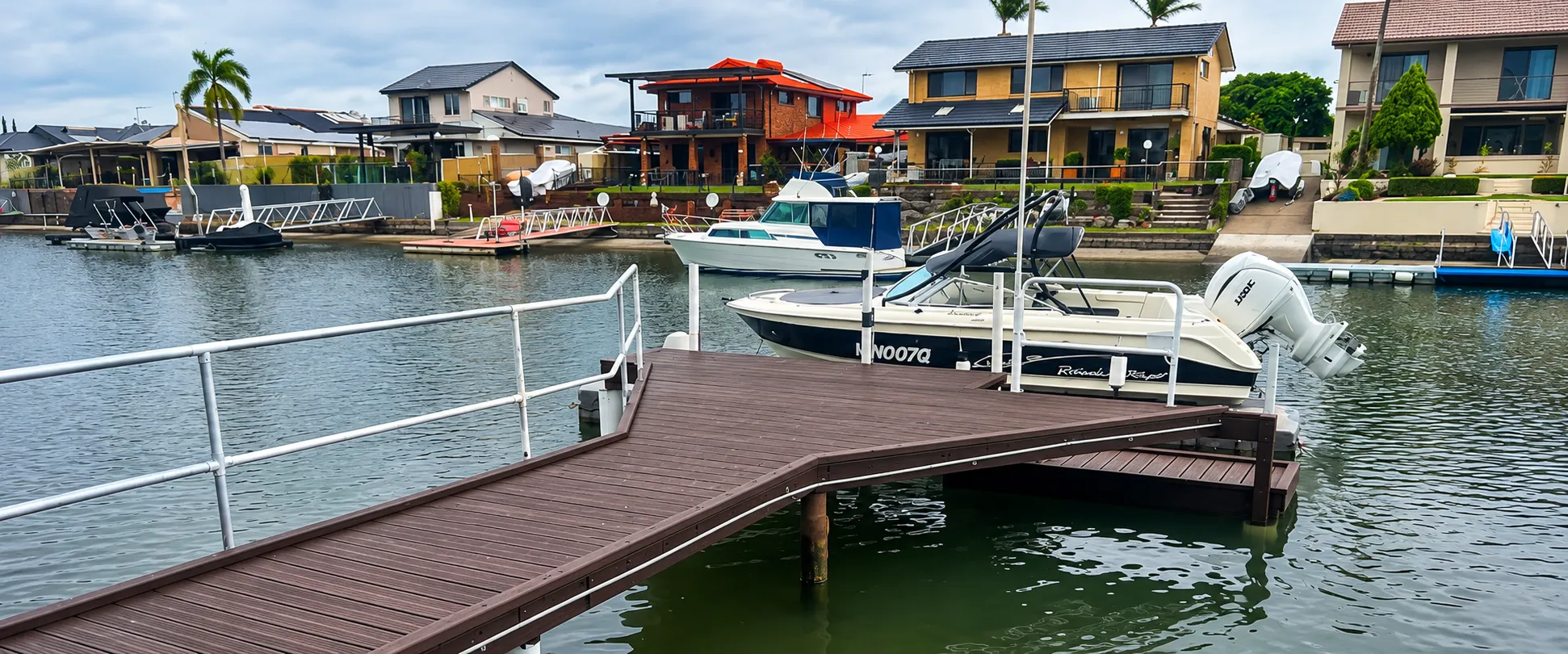
Accoya is a modified timber made from sustainably sourced softwood. It has a Class 1 durability rating, the highest there is, and it swells and shrinks far less than standard timber, so your boards move less with the weather.
Trade-offs: costs more upfront, is softer than dense hardwoods, and weathers to silver-grey unless it's coated.
Used on: Decks
FRP
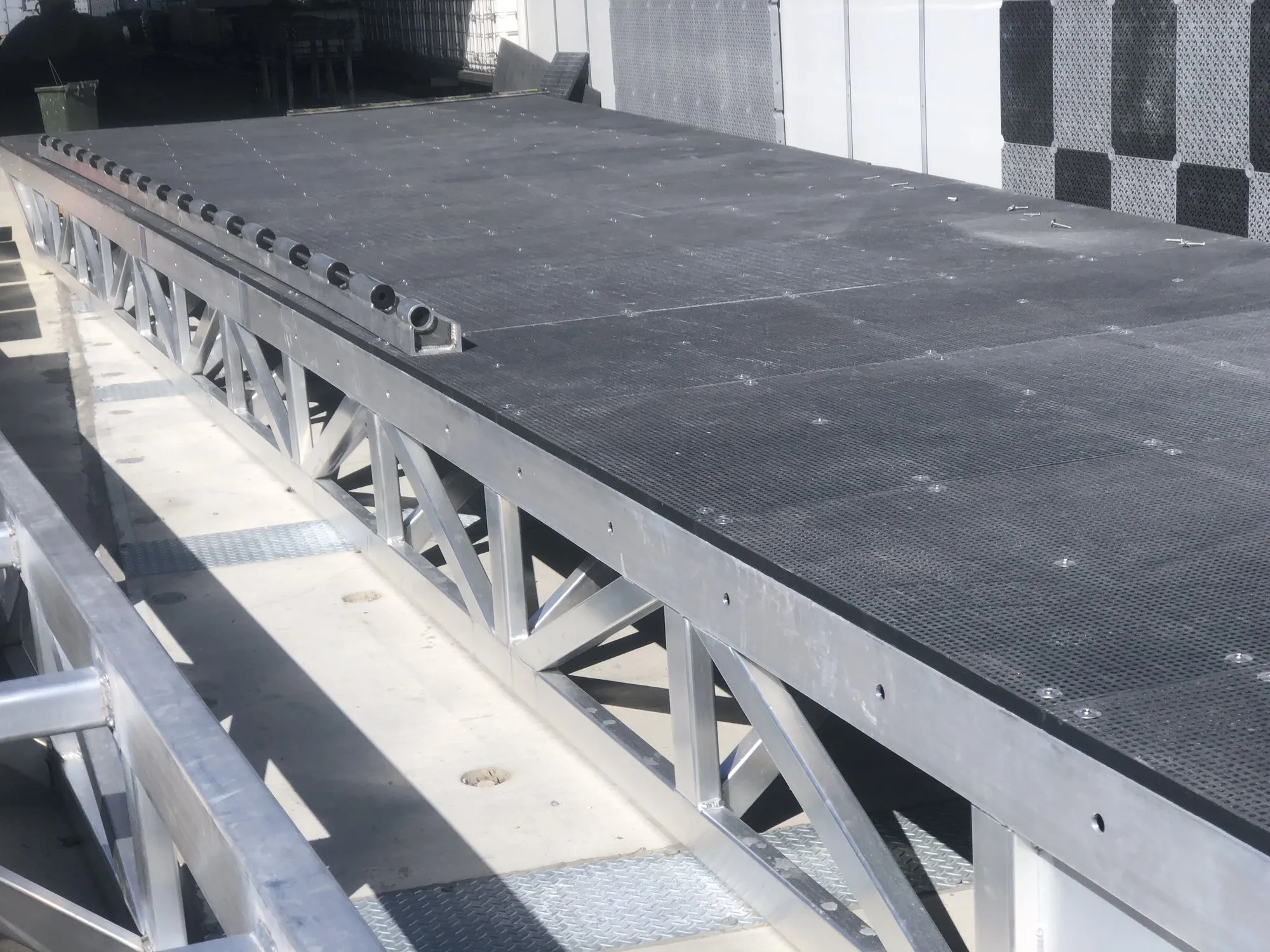
FRP (fibreglass-reinforced plastic) won't rot, splinter or corrode in salt water, and it never needs oiling. You can get it with a slip-resistant surface, and mesh grating lets light and water through.
Trade-offs: looks more industrial than timber, and costs more than standard timber.
Used on: Boardwalks
Hardwood
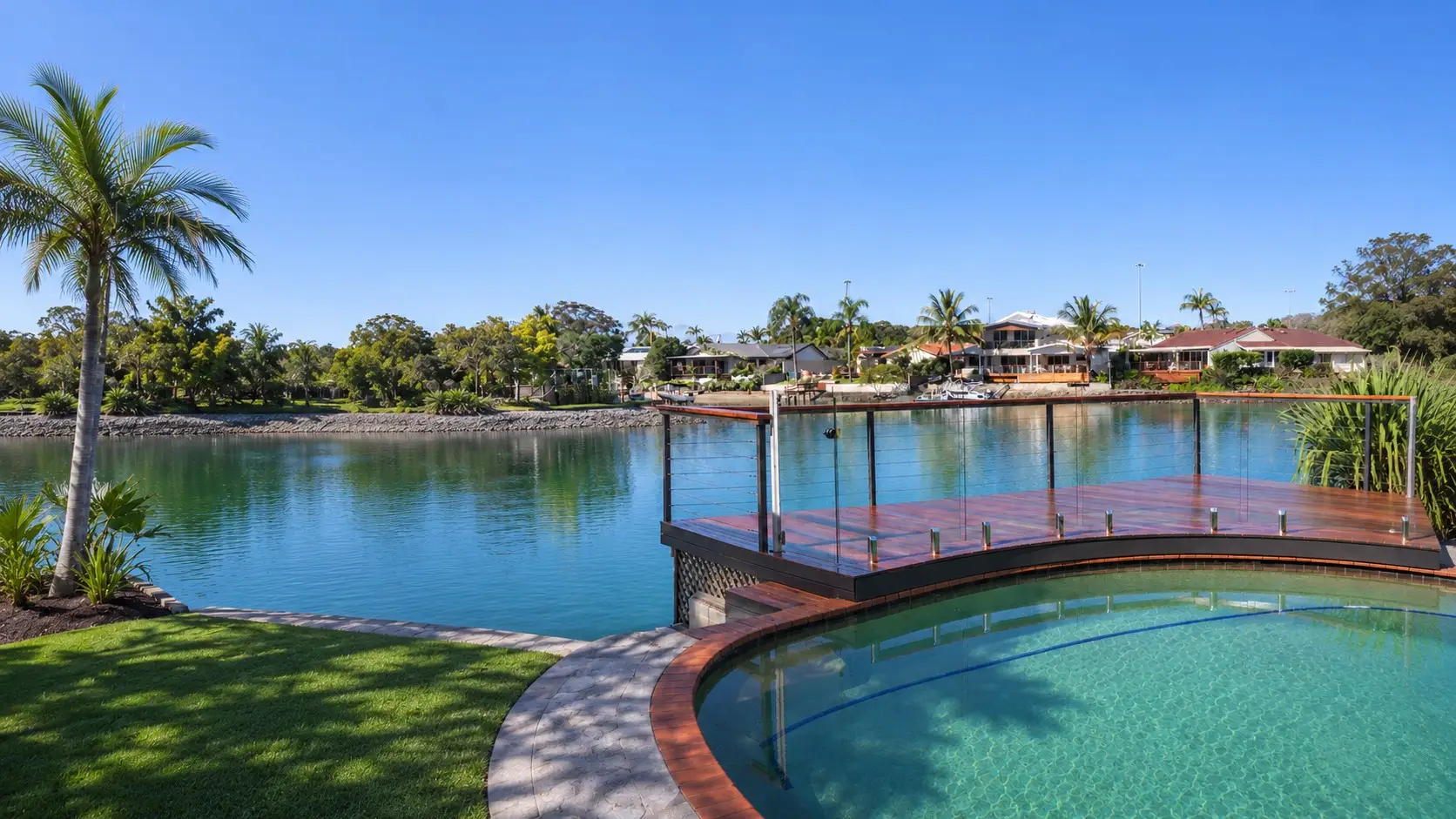
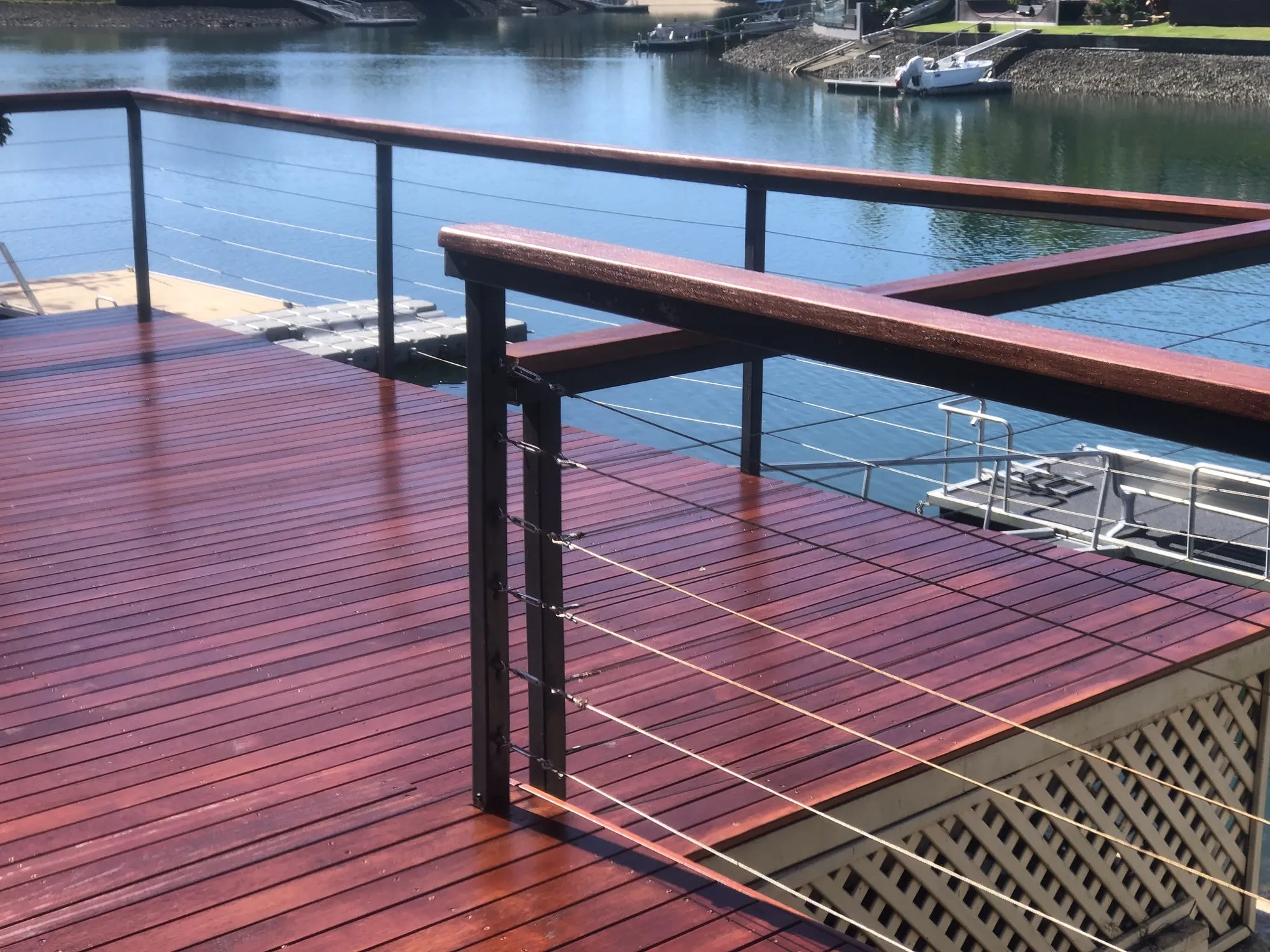
Australian hardwoods like spotted gum, ironbark and blackbutt have the top natural durability rating, rated to last more than 40 years above ground. You get the warm look and feel of real timber. On waterfront jobs we add a waterproof sealer coat for the best protection.
Trade-offs: needs re-oiling about once a year, more often if exposed or near salt water, can split if left unoiled, and can stain paving brown when new.
Used on: Decks
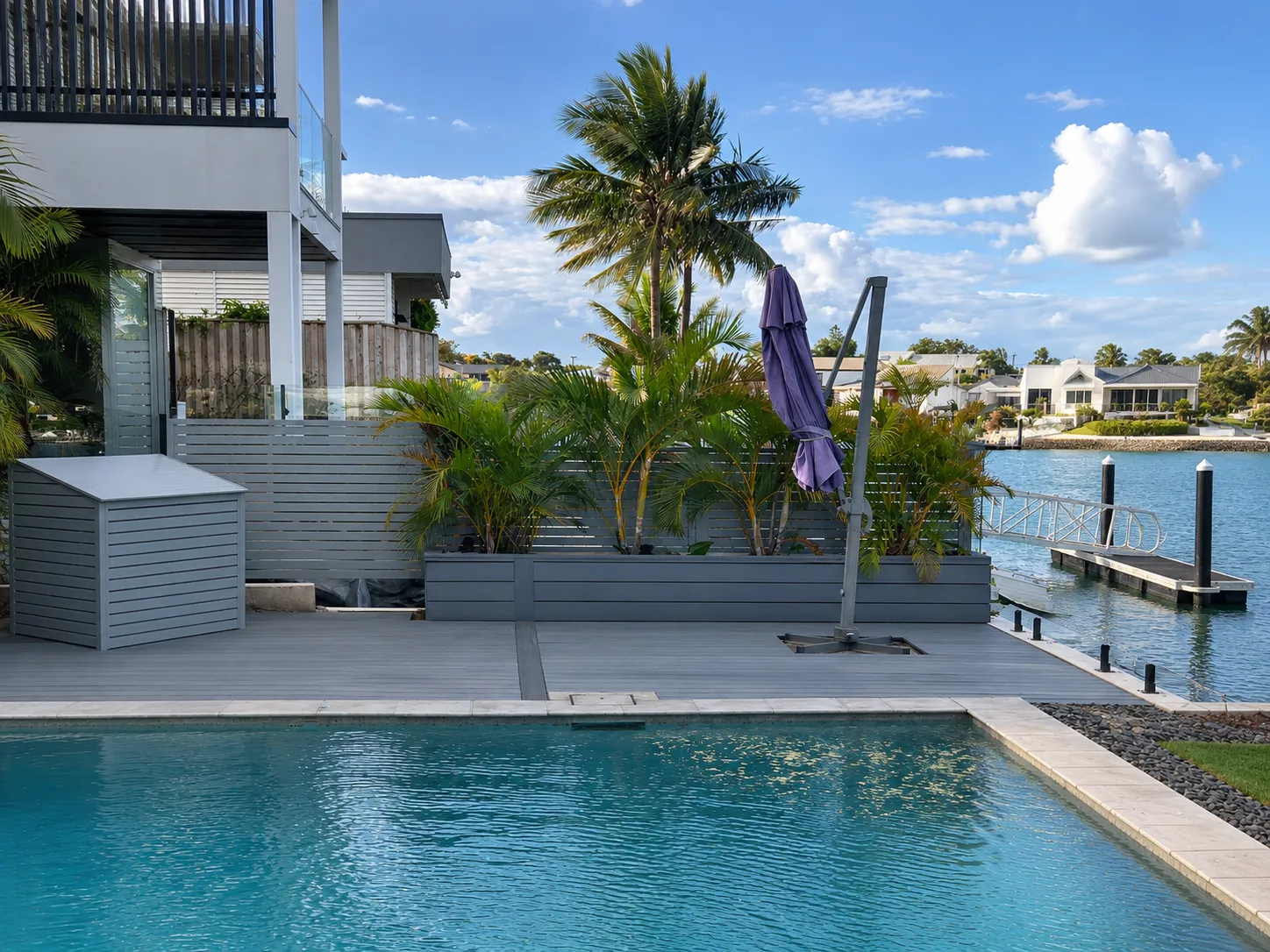
Composite
Composite boards never need oiling or staining, and they don't splinter. They suit anyone who wants a deck that looks good with little upkeep.
Trade-offs: dark colours get hot underfoot in full summer sun, and the boards need the right expansion gaps.
Used on: Decks
Frequently asked questions
Which material is right for my deck or boardwalk?
It depends on your spot, how close it is to the water, and your budget. We'll recommend one at the site visit and price it in your written quote.
Which material costs the most?
Accoya and FRP cost more upfront than standard timber. Your written quote shows the exact price for your job.
Which material needs the least upkeep?
FRP and composite. Neither needs oiling or staining.
Can Accoya go in salt water?
No. We only use it above the water, never for piles or anything in it.